Why Series Sell: 12-Book Strategy for More Keywords & Repeat Buyers
Why Series Sell: 12-Book Strategy for More Keywords & Repeat Buyers
Power of coloring book series hero
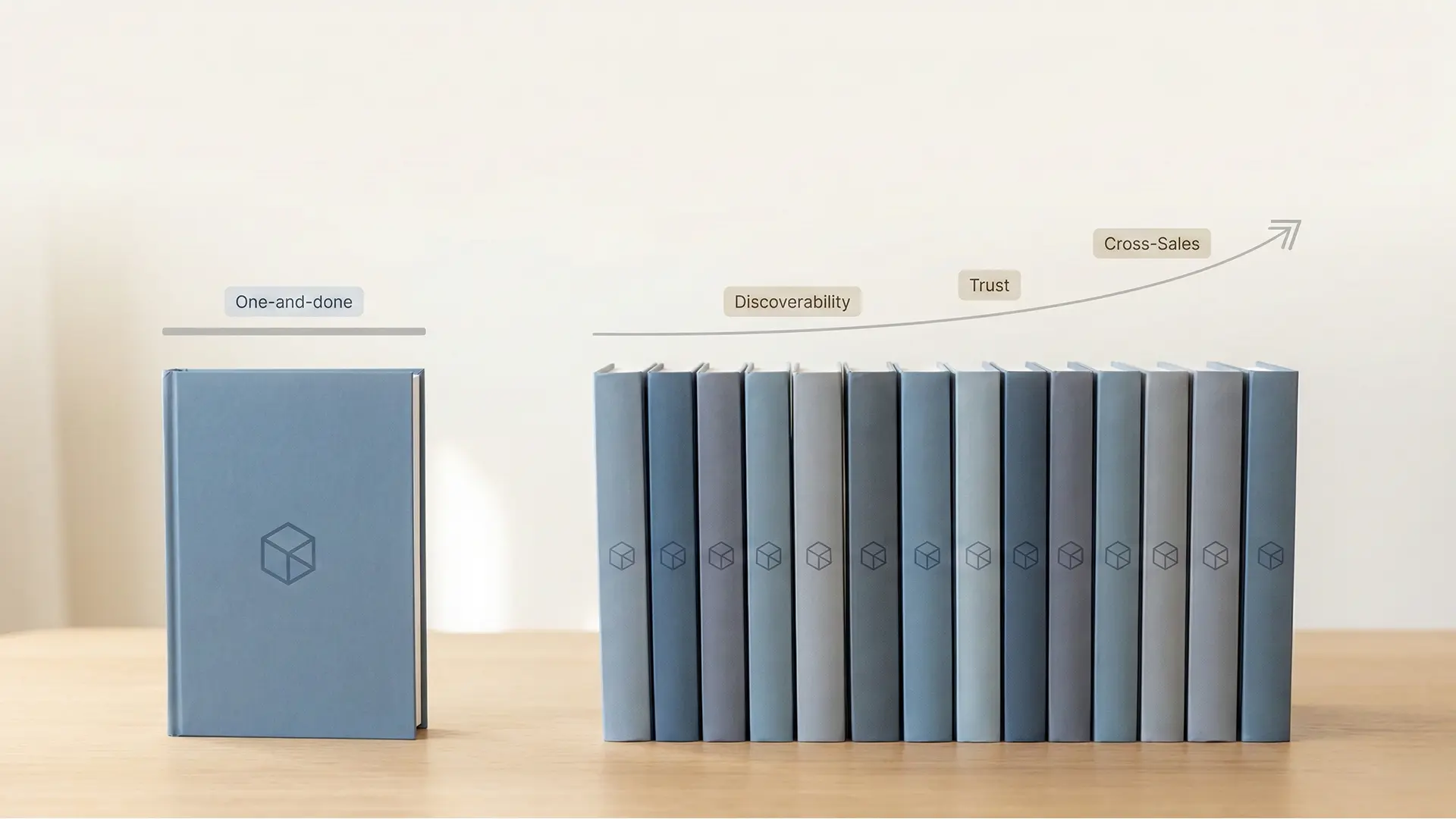
Launching a single coloring book is a “one and done” trap. The most successful publishers pivot to a series strategy, leveraging the compounding power of 12+ books to accelerate discoverability and revenue.
1.0 The Single-Book Fallacy
Publishing one book on KDP fights an uphill battle against high per-unit costs and low visibility.
- Margin Squeeze: KDP’s Print-on-Demand (POD) model prevents economies of scale. You cannot compete on price with $3.99 bulk-printed books.
- Discoverability Dead End: A single book has a tiny digital footprint. With no other products to promote, a single sale is a “dead end” with no retention mechanism.
2.0 The Series Multiplier Effect
A series transforms a product into a brand asset, creating a “competitive moat” that is hard to replicate.
2.1 Case Study: “Cats Being Dicks”
This series succeeded because its unique, humorous theme created a defensible brand. It became so desirable that it spurred copycats, proving that a distinct niche attracts organic demand.
2.2 The 10-12 Book “Uptick”
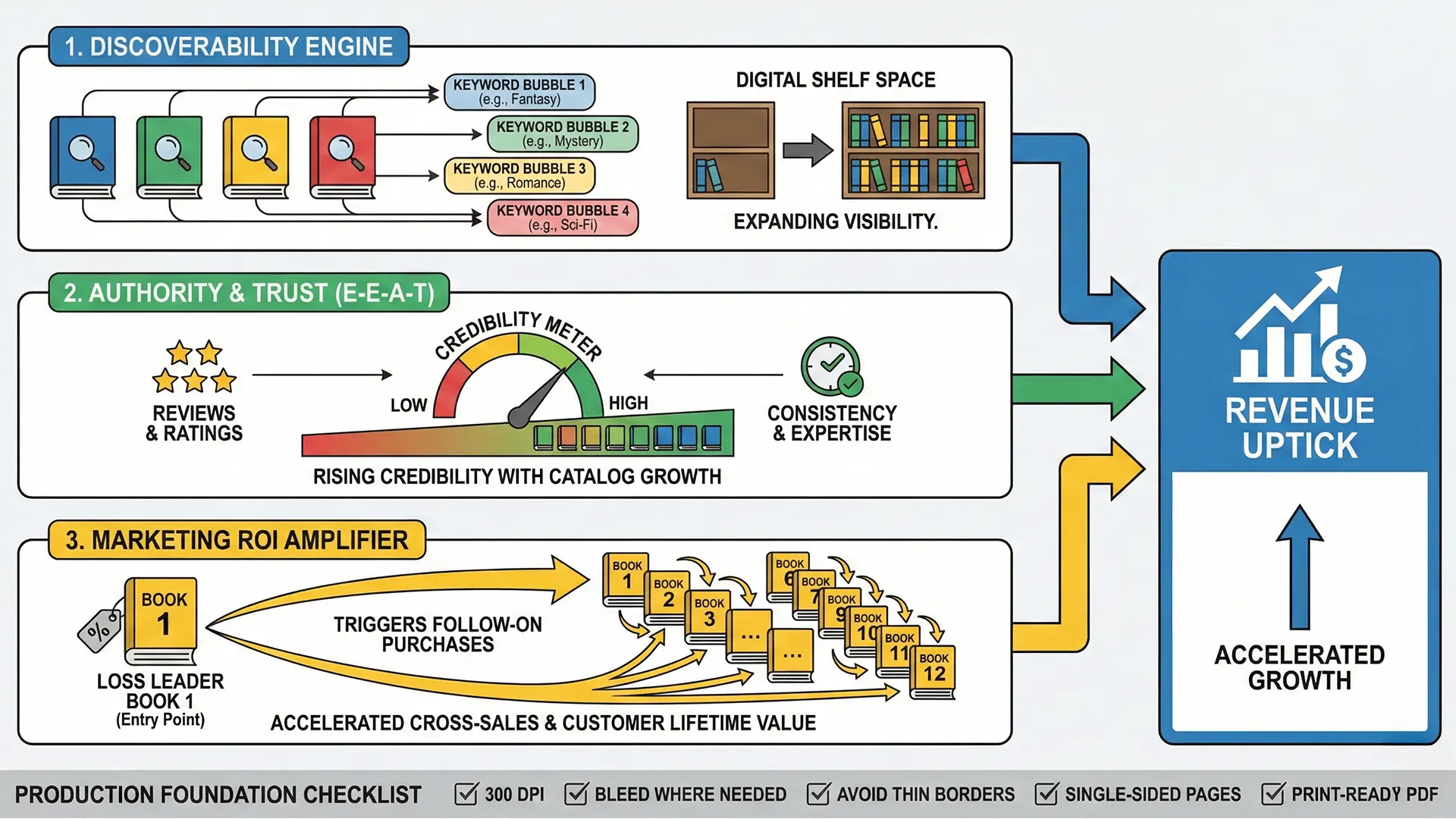
Creators often see a revenue acceleration after publishing 10-12 books. This isn’t luck; it’s critical mass. * Digital Shelf Space: 12 books occupy 12x the space, allowing you to target broader keywords (e.g., “funny cat,” “sarcastic gift”). * Entity Recognition: A cohesive series helps algorithms (Google/Amazon) recognize you as an authoritative entity in your niche. * Marketing ROI: Ads become more profitable. A campaign for Book 1 introduces a customer to the entire 12-book back catalog, increasing Lifetime Value (LTV).
Series strategy marketing funnel diagram
3.0 Production Playbook: Building the Pipeline
To scale to 12 books, you need a repeatable production workflow.
| Category | Tools | Strategy |
|---|---|---|
| Rapid Design | Canva / CreateColoringBooks.ai | Best for quick layouts and initial designs. |
| Professional | Affinity Publisher / InDesign | Industry standard for precise control over layout. |
| Research | Tangent Templates | Essential for niche and keyword research. |
3.1 Technical Non-Negotiables
- Resolution: 300 DPI is mandatory. Higher (600 DPI) creates processing issues.
- Bleed: Add 0.125” to outer edges to prevent white slivers.
- Layout: Use single-sided pages with a “blank page” note to prevent marker bleed-through.
- Text: Never flatten text into images; keep it as an editable layer for sharpness.
4.0 Launch Strategy: The “Loss Leader”
Don’t price for profit on day one. Price for acquisition.
- Loss Leader Pricing: Price Book 1 just above printing cost to funnel readers into the rest of the full-priced series.
- Review Seeding: Order proof copies and gift them to friends. Ask them to post photos of colored pages and leave a review (allowed even without a Verified Purchase).
- GEO Content: Build an author platform answering user intents (e.g., “How to stop marker bleed”) to drive organic traffic.
Quick Checklist (Series Planning)
- Concept: Defined a scalable theme (e.g., “Cats in Space,” “Cats in History”).
- Pipeline: Set up a workflow to produce 10-12 books efficiently.
- SEO: Targeted unique keywords for each book title to widen net.
- Pricing: Set Book 1 as a low-cost entry point.
- Retention: Included a “More from this Author” page in the back of every book.