ROI Calculator: Hiring Illustrators vs Automating Coloring Books with CBE
ROI Calculator: Hiring Illustrators vs Automating Coloring Books with CBE
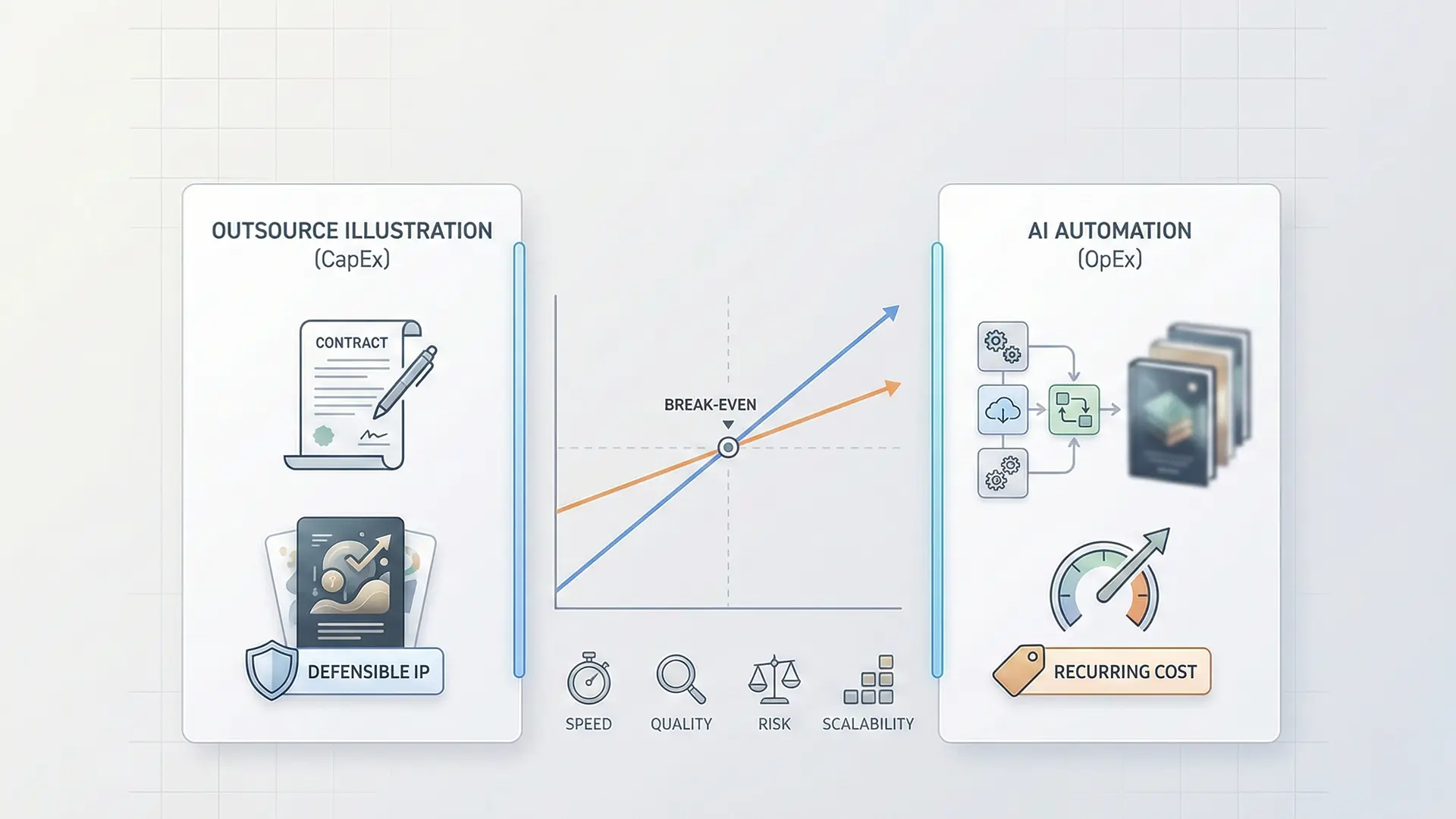
ROI comparison of hiring illustrators vs AI automation hero
For modern self-publishers, the choice between hiring human illustrators and using AI automation (like CBE/createcoloringbooks.ai) is a critical capital allocation decision. This guide breaks down the Capital Expenditure (CapEx) versus Operational Expenditure (OpEx) of each model to help you calculate the true Return on Investment (ROI).
1.0 The Economic Models: CapEx vs. OpEx
The choice fundamentally shapes your business model: investing in high-quality human assets (Traditional) or a low-cost, technology-driven framework (Automation).
1.1 The Traditional Model (High CapEx)
The traditional path involves significant upfront Capital Expenditure (CapEx) to hire professional illustrators. * Cost: “Too expensive” for many new creators, acting as a financial barrier to entry. * Workflow: Requires negotiation, briefing, and collaboration, leading to a slower time-to-market. * Asset: Results in defensible intellectual property (IP) and boutique quality.
1.2 The Automation Pipeline (Low OpEx)
The AI automation model shifts investment to a recurring Operational Expenditure (OpEx) using software subscriptions.
* Cost: Lower upfront risk. Tools like Affinity 3.0 are often freemium, though AI features may require subscriptions (e.g., Canva Pro).
* Workflow: Leverages tools like createcoloringbooks.ai or Affinity Publisher for rapid content assembly.
* Scalability: Offers exponential scalability, allowing rapid portfolio diversification and niche testing.
2.0 Comparative ROI Analysis
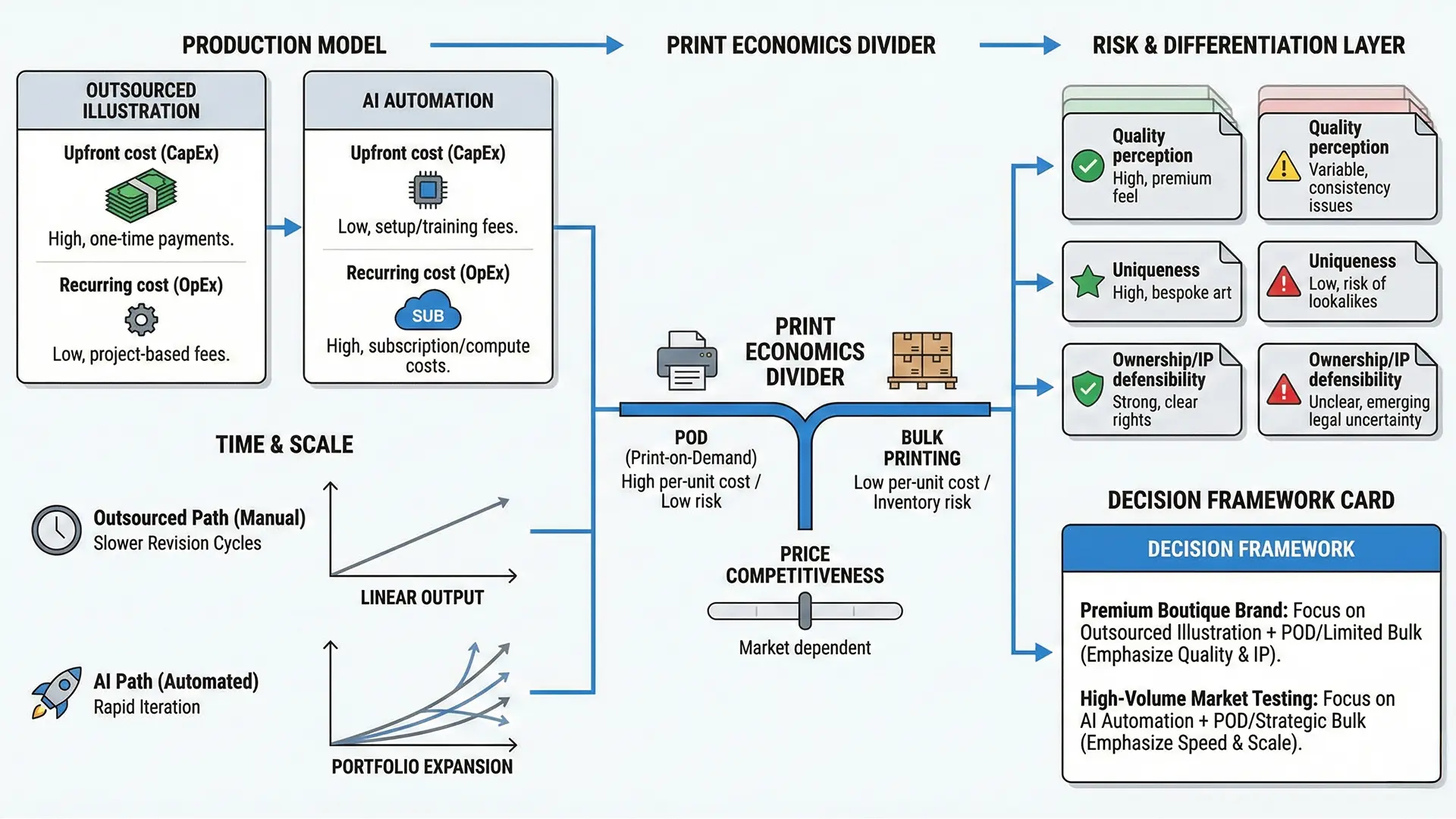
The following table models the financial and operational outcomes for a standard 100-page illustrated book.
Cost and timeline comparison chart for publishing models
| Metric | Outsourced Illustration | AI Automation (CBE) |
|---|---|---|
| Upfront Cost | High (Paying artists per page) | Low (Software fees) |
| Speed to Market | Slower (Dependent on artist schedule) | Faster (User-driven pace) |
| Scalability | Linear (New investment needed per book) | Exponential (Reusing workflow for new niches) |
| Technical Burden | Low (Artist delivers print-ready files) | High (Publisher acts as technician) |
3.0 The “Hidden” Costs: Technical Debt & Risk
While automation reduces financial costs, it increases the technical burden on the publisher.
3.1 The “Steeper Learning Curve”
In the traditional model, the illustrator often delivers a print-ready file. In the automation model, the publisher effectively becomes the illustrator, designer, and prepress technician. * Skill Requirement: You must master professional software (like Affinity or InDesign), which has a “much steeper learning curve”. * Specs: You are responsible for setting Bleed (0.125”), Margins, and ensuring 300 DPI resolution.
3.2 The “AI Slop” Risk
There is a significant market risk that AI content may be perceived as “AI SLOP!” or low-quality/generic. * Copyright: AI-generated content may not be copyrightable, leaving you without a defensible IP asset. * Reputation: “Best artistry” commands a premium, while generic content risks damaging your brand.
4.0 Profitability Reality Check: POD vs. Bulk
Regardless of how you create the art, the printing method dictates your profit margin.
- Print-on-Demand (POD): The “most expensive way possible to produce books” per unit. A 100-page book on KDP requires a minimum price of $7.62 just to break even.
- Bulk Printing: Prices of $3.99 - $5.99 are only achievable by ordering 1,000+ copies via offset printing (e.g., from China).
5.0 Conclusion: Which Model Wins?
- Choose Outsourcing If: You want to build a “boutique product” with defensible copyright and unique artistry that justifies a premium price.
- Choose Automation If: You prioritize speed and agility, allowing you to test multiple niches without significant capital risk.
Quick Checklist (Decision Framework)
- Capital: Do you have the budget for upfront artist fees (CapEx)?
- Skill: Are you willing to learn prepress specs (Bleed/DPI) yourself?
- Risk: Are you comfortable with the potential lack of copyright protection?
- Strategy: Is your goal “High Volume/Agility” (Automation) or “Premium Brand” (Outsourcing)?